“Under pressure, you don’t rise to the occasion—you sink to the level of your training.” – Often attributed to Archilochus
Why calmness matters most when things go wrong
Anyone can stay calm when life is predictable. The real test comes when plans fall apart, emotions run high, and uncertainty takes over. Whether it’s a difficult conversation, a high-stakes presentation, a personal crisis, or simply an overwhelming day, pressure has a way of revealing how prepared we truly are.
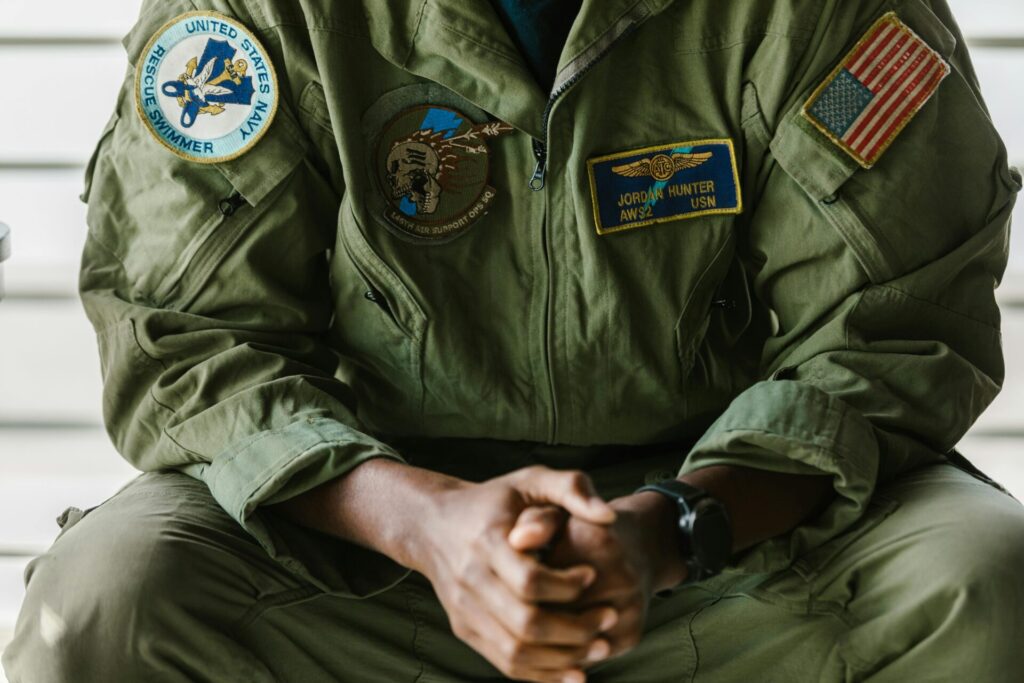
Elite military units understand this better than anyone. Navy SEALs operate in environments where panic can have serious consequences. Yet their greatest advantage is not physical strength or fearlessness. It is their ability to remain composed when others become overwhelmed.
The lesson is surprisingly relevant to everyday life. Most people will never face a combat mission, but everyone faces pressure. The principles that help SEALs stay clear-headed in extreme situations can help anyone think better, communicate more effectively, and make smarter decisions when it matters most.
The goal is not to eliminate stress
One of the biggest misconceptions about mental toughness is that strong people don’t feel stress. They do.
Elite performers experience fear, uncertainty, and pressure just like everyone else. The difference is that they train themselves to function effectively despite those feelings.
When stress appears, many people immediately try to fight it. They become frustrated that they’re nervous. They interpret anxiety as a sign that something is wrong. In reality, pressure is often a sign that something matters.
The objective is not to eliminate stress but to prevent it from taking control. Calmness is not the absence of pressure—it is the ability to operate effectively within it.
The breathing technique that changes your physiology
One of the most widely discussed tools used in military and high-performance environments is controlled breathing.
When pressure rises, breathing naturally becomes faster and shallower. This signals danger to the nervous system, which can increase tension, narrow attention, and impair decision-making. The solution is surprisingly simple: slow the breath deliberately.
A commonly used technique involves inhaling through the nose for four seconds, holding briefly, exhaling for four seconds, holding again, and repeating the cycle.
Research has shown that slow, controlled breathing can reduce physiological stress responses, improve emotional regulation, and increase cognitive performance under pressure. More importantly, it provides something crucial in stressful moments: a sense of control.
You may not be able to control the situation immediately, but you can control your breathing. And that often becomes the first step toward regaining composure.
The Calm Under Pressure Protocol
When you find yourself overwhelmed, use the following process to stabilize your mind and regain clarity.
- Control your breathing.
Slow your breathing immediately. Focus on the rhythm rather than the problem. This helps calm the body’s stress response before it escalates. - Narrow your focus.
Under pressure, the mind often jumps ahead to worst-case scenarios. Instead, bring your attention back to the present moment. Ask yourself: What requires my attention right now? - Separate facts from stories.
Stress encourages speculation. Distinguish between what is actually happening and what you fear might happen. This simple distinction often reduces unnecessary anxiety. - Focus on the next action.
Do not try to solve everything at once. Identify the next useful step and take it. Progress creates momentum and reduces feelings of helplessness. - Maintain a deliberate pace.
Pressure creates an urge to rush. Resist it. Calm people often appear slower because they prioritize accuracy over speed. Deliberate action usually produces better results than frantic activity.
Why focus beats intensity
Many people assume that performing under pressure requires becoming more aggressive, more emotional, or more energized. In reality, the opposite is often true.
Elite performers tend to simplify rather than intensify. They narrow their attention to what matters. They ignore distractions. They avoid wasting energy on things outside their control.
This principle appears across many disciplines. Martial artists focus on technique rather than emotion. Surgeons focus on procedure rather than panic. Pilots focus on checklists rather than fear.
When pressure increases, complexity becomes the enemy. The ability to simplify is often the ability to stay calm.
Training before you need it
The most important lesson from elite performers is that calmness is not improvised. It is trained.
SEALs do not wait until a crisis begins to practice breathing, focus, and emotional control. They build these habits repeatedly so they are available when pressure arrives. The same principle applies to everyday life.
Practicing calmness during minor frustrations prepares you for larger challenges. Taking a deliberate breath before responding to an email, pausing before reacting during an argument, or slowing down when things become chaotic are all forms of training. Every moment of composure strengthens the habit.
Pressure reveals preparation
Most people think confidence comes from knowing everything will go well. True confidence comes from knowing that even if things go poorly, you can handle them.
That confidence is built through preparation, repetition, and the ability to remain steady when circumstances become uncertain.
The next time you feel pressure rising, remember: calmness is not a personality trait. It is a skill. Control your breathing. Narrow your focus. Take the next step. And let pressure reveal your training—not your panic.