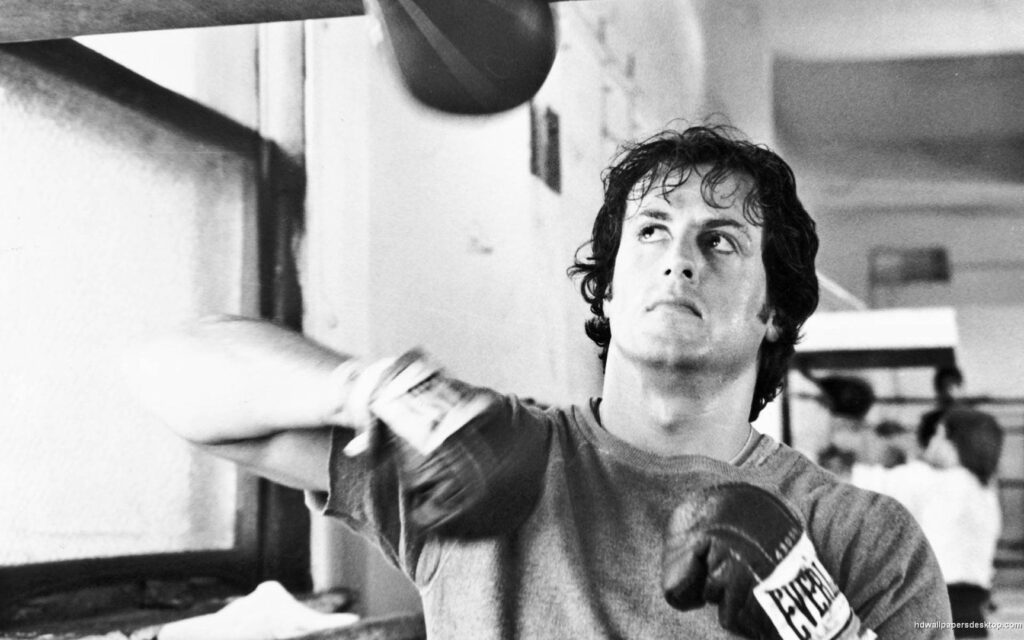
“It ain’t about how hard you hit. It’s about how hard you can get hit and keep moving forward.” – Rocky Balboa
One of the most important lessons ever put on film
Few movie scenes have had the cultural impact of Rocky Balboa’s famous speech about life, hardship, and perseverance. The quote is often shared as a motivational soundbite, but its real power lies in a deeper truth that many people overlook.
The speech is not about boxing. It is about resilience.
Throughout the Rocky films, the character’s greatest strength is never his speed, talent, or physical gifts. In fact, Rocky is repeatedly portrayed as the underdog. He is outmatched, underestimated, and often less naturally gifted than the people standing across from him.
What separates him from everyone else is his willingness to keep going when progress is slow, uncertain, and painful. That lesson is just as relevant outside the boxing ring as it is inside it.
The confidence myth
Most people think confidence comes from winning. They imagine that successful people become confident because life goes their way. The promotion arrives. The business succeeds. The relationship works out. The audience applauds.
Yet confidence built entirely on positive outcomes is surprisingly fragile. If your self-belief depends on everything going according to plan, it disappears the moment life becomes difficult.
This is one reason psychologists distinguish between self-esteem and self-efficacy. Self-esteem is often tied to how we feel about ourselves, while self-efficacy—popularized by psychologist Albert Bandura—refers to our belief in our ability to handle challenges and achieve goals.
The distinction matters. A person with strong self-efficacy does not necessarily believe they will always succeed. They believe they can adapt, learn, and continue moving forward even when things go wrong.
That is precisely what Rocky demonstrates throughout the series. His confidence is not built on certainty of victory. It is built on certainty of effort.
Why resilience creates confidence
When people think about courage, they often focus on dramatic moments. The speech. The fight. The big decision. In reality, confidence is usually built through something much less glamorous: repeated recovery.
Every setback presents a choice. You can interpret the experience as evidence that you are incapable, or you can interpret it as part of the process of growth. The interpretation matters because it determines whether you stop or continue.
Psychologist Carol Dweck’s research on growth mindset has shown that people who view challenges as opportunities to learn tend to persist longer and ultimately achieve more than those who view setbacks as proof of limitation.
Rocky embodies this mindset almost perfectly. Every loss becomes information. Every obstacle becomes training. Every setback becomes part of the story rather than the end of it.
This is why the character resonates so deeply across generations. People recognize that life rarely rewards perfection. More often, it rewards persistence.
The problem with waiting to feel ready
One of the most common reasons people remain stuck is that they believe they need confidence before taking action. They wait until they feel ready to start the business, ask the question, share the work, apply for the opportunity, or make the change.
The problem is that readiness is often a moving target. Rocky’s journey follows the opposite pattern. He acts first. He trains first. He shows up first. The confidence emerges later as a result of the effort.
Modern neuroscience supports this approach. The brain develops confidence through evidence. Every time you face a challenge and survive it, your nervous system gathers proof that you are more capable than you previously believed.
Confidence is not something you discover. It is something you earn through repeated exposure to difficulty.
The Rocky Reset
When life knocks you down, use this simple framework to regain momentum.
- Focus on the next step, not the entire journey. Overwhelm often comes from trying to solve everything at once. Direct your attention toward the next useful action.
- Separate setbacks from identity. Failing at something does not mean you are a failure. It means you encountered a challenge that requires adjustment.
- Ask what the experience taught you. Every obstacle contains information if you are willing to look for it.
- Return to action quickly. Reflection is valuable, but prolonged hesitation often turns temporary setbacks into permanent ones.
- Measure consistency, not perfection. Progress is usually built through repeated effort rather than flawless execution.
Keep moving forward
The Rocky films endure because they capture something fundamental about human growth.
Life is unpredictable. Plans fail. Opportunities disappear. People disappoint us. We disappoint ourselves. Every person, regardless of talent or intelligence, eventually encounters situations that test their resilience.
The question is never whether you will be challenged. The question is how you will respond when the challenge arrives. Will you interpret the setback as a signal to stop? Or will you treat it as part of the process?
The lesson Rocky teaches is remarkably simple, but incredibly powerful: confidence is not built by avoiding difficulty. It is built by proving to yourself, again and again, that you can keep going despite it.
You do not need to win every round. You do not need to have everything figured out. You only need to keep moving forward. And often, that is enough to change the entire trajectory of your life.