Confidence is often marketed like a personality trait. Either you have it or you do not. Either you walk into a room with natural certainty, or you spend your life trying to fake it.
That idea sounds neat, but it falls apart in real life.
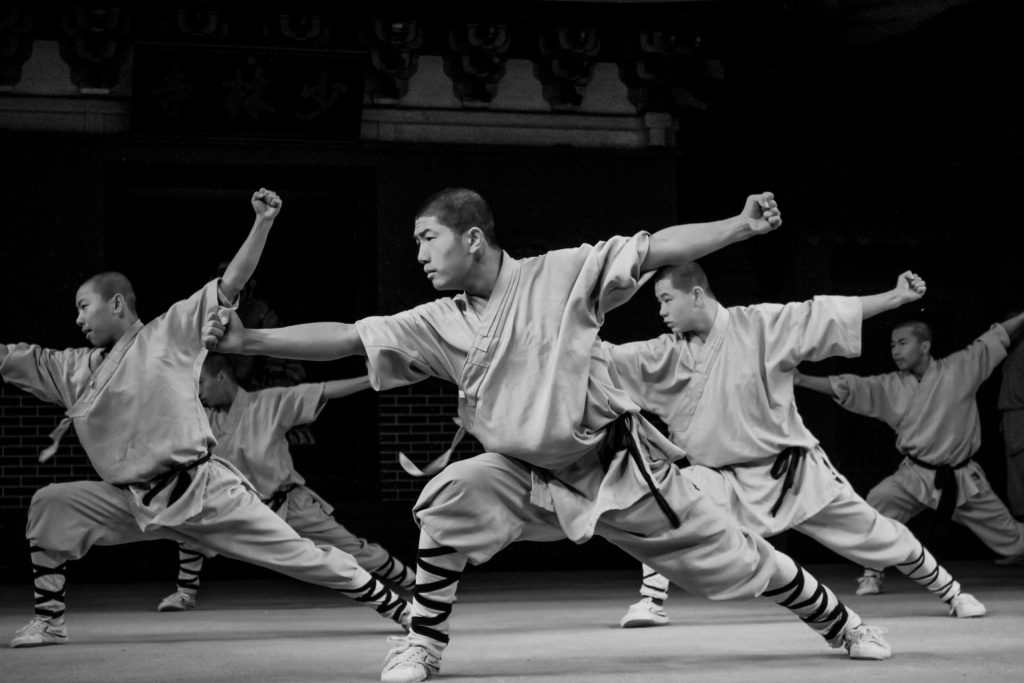
Most confidence is not inborn. It is built. It grows through repetition, self-control, and learning how to handle discomfort without collapsing under it. That is exactly why martial arts principles remain so useful outside the gym or dojo. They were never just about fighting. At their best, they are systems for training the mind under pressure.
That matters in everyday life more than people realize. You do not need to be a fighter to benefit from martial arts philosophy. The same principles that help someone stay calm in sparring can help you speak up at work, stop second-guessing yourself, deal with social anxiety, or recover faster from failure.
The good news is that this is not just ancient philosophy dressed up for modern audiences. Many of these ideas are also supported by contemporary psychology and behavioral research. That makes martial arts a rare meeting point between old-world wisdom and modern science.
Here are six martial arts principles that can help build real confidence in everyday life.
1. Act before you feel ready
One of the clearest lessons in martial arts is that confidence does not usually come first. Action does.
No one begins training already composed, disciplined, and fearless. Beginners feel awkward. They hesitate. They overthink. They make mistakes. But through repeated action, hesitation starts to shrink. The body learns. The mind catches up. Confidence grows after the reps.
This applies just as much outside martial arts. If you are waiting to feel fully confident before speaking up, starting a project, setting a boundary, or doing something uncomfortable, you may be waiting forever. In most cases, confidence is the reward for action, not the prerequisite.
Sun Tzu’s The Art of War is often read as a book about conflict, but many of its deeper lessons are about preparation and control. One of its most quoted ideas is that “every battle is won before it is fought.” The modern takeaway is simple: confidence comes from preparation and repeated exposure, not from hoping fear disappears on its own.
That idea also holds up in current research. Repeated practice and structured exposure are strongly associated with increased self-confidence and reduced hesitation across learning environments. In plain English, people trust themselves more when they have done the thing more than once.
In daily life, that might look like:
- speaking once in the meeting instead of waiting for the perfect moment
- making the difficult phone call
- attending the social event even if you feel awkward
- practicing assertiveness in small, manageable steps
Real confidence is often just evidence. You build it by proving to yourself that you can act even when you are uncomfortable.
2. Control your breath to control your state
Martial arts training quickly teaches a brutal truth: when your breathing gets sloppy, everything else often follows.
Under stress, breathing becomes shallow and fast. Muscles tighten. Attention narrows. Thoughts speed up. In that state, confidence tends to disappear, because the body is already acting as if danger has taken over.
That is why breath control matters so much. In martial arts, breath helps regulate movement, timing, and focus. In everyday life, it does something just as important: it gives you a way to interrupt the stress response before it hijacks your thinking.
This is especially useful before high-pressure situations like:
- job interviews
- presentations
- difficult conversations
- social situations that trigger anxiety
- moments when you feel yourself spiraling
Marcus Aurelius often returned to the idea of governing the self rather than being ruled by impulse. His writing in Meditations emphasizes discipline, perspective, and deliberate response. That mindset fits perfectly here. Before reacting to pressure, return to yourself first.
Modern science backs this up. Research on slow breathing and breath-regulation practices has found that they can reduce stress and improve emotional regulation. That matters because confidence is not only about what you think. It is also about what state your body is in when pressure hits.
Sometimes the most confident move is not speaking louder or forcing bravado. It is breathing, slowing down, and refusing to let panic make your decisions.
3. Build confidence through discipline, not mood
Martial arts are not built on motivation. They are built on repetition.
You train the basics. You show up again. You do the work whether or not it feels exciting. That may not sound inspiring, but it is one of the fastest ways to build self-trust.
A lot of people treat confidence like a feeling they need to discover. Martial arts frame it differently. Confidence is something you earn by becoming reliable to yourself. When you keep promises to yourself, follow routines, and continue through resistance, you start building proof that you can be counted on.
That is a far stronger foundation than waiting for motivation.


Miyamoto Musashi’s The Book of Five Rings is steeped in this kind of thinking. His philosophy emphasizes discipline, observation, and consistent training over emotional impulse. He was not interested in vague inspiration. He was interested in mastery.
Modern behavioral science lands in a similar place. Research on habits, self-regulation, and implementation intentions has repeatedly shown that people are more likely to follow through when they rely on systems and specific plans rather than emotion alone. In practical terms, discipline reduces the amount of negotiation you do with yourself.
That can improve confidence in surprising ways. When you consistently train, write, meditate, exercise, study, or keep a routine, you begin to trust your own follow-through. Confidence becomes less about hype and more about dependability.
4. Stay calm instead of trying to look tough
This is one of the most misunderstood lessons in martial arts.
Many people assume martial confidence looks aggressive: loud voice, hard stare, dominant energy, constant certainty. In practice, experienced martial artists often show the opposite. They tend to move with economy, stay composed, and avoid wasting energy trying to prove themselves.
That is a useful model for everyday confidence because people often sabotage themselves by performing toughness instead of building steadiness.
Calm is a stronger signal than aggression.
In work settings, this might mean not rushing to defend yourself every time you are challenged. In relationships, it might mean holding your ground without escalating. In social situations, it might mean speaking clearly without over-explaining. These are quieter forms of confidence, but they are usually more durable.
Ancient military writing often praised restraint more than theatrics. Sun Tzu repeatedly emphasized timing, strategy, and self-command over reckless displays of force. The same principle translates well to modern life. The strongest person in the room is often the one least desperate to advertise it.
Contemporary research on self-efficacy also supports this broader idea. When people believe they can handle challenges, they tend to experience less distress and respond more effectively. Confidence, in that sense, is less about projecting power and more about reducing internal chaos.
5. Treat posture and presence like part of your training
Martial arts put a surprising amount of emphasis on posture, stance, balance, and physical presence. That is not just for performance. It affects mindset.
When you carry yourself in a collapsed, hesitant, scattered way, your body reinforces uncertainty. When you stand with balance, groundedness, and intention, you send a different message to both yourself and others.
This does not mean posture alone creates confidence. That would be too simplistic. But physical presence does matter. The body and mind are constantly feeding information to each other.
This is one reason martial arts can visibly change people even when they are still beginners. They may not feel transformed yet, but they often begin moving with more control. Their attention sharpens. Their posture improves. Their reactions become less frantic. Those physical shifts can reinforce emotional ones.
Classical accounts of leaders such as Alexander the Great often highlighted not just courage but composure, bearing, and force of presence. Ancient writers understood something modern people still forget: how you carry yourself can change how you are perceived and how you experience stress.
Today, psychology is more cautious about making oversized claims, but the broader link between body state and emotional regulation is well supported. Grounding techniques, breathing practices, and physical awareness all play a role in how people manage pressure.
Sometimes confidence starts with something as simple as lifting your gaze, planting your feet, and taking up your space without apology.
6. Measure confidence by how well you recover
One of the healthiest things martial arts teach is that mistakes are normal.
You miss the technique. You lose focus. You get corrected. You underperform. Then you return to practice.
That cycle matters because many people with low confidence do not just struggle with discomfort. They struggle with recovery. One awkward moment becomes a personal identity crisis. One failure becomes proof that they are not capable. One bad day becomes a reason to quit.
Martial arts push against that. They normalize correction, repetition, and gradual improvement. Progress is not about never struggling. It is about coming back.
That is a much sturdier model of confidence. Instead of asking, “Did I look strong all the time?” the better question becomes, “How quickly did I reset?”
Marcus Aurelius offers a useful lens again here. Stoicism was never about pretending nothing hurts. It was about returning to reason, perspective, and self-command after life knocked you off center.
Modern learning science supports this principle too. Confidence grows when people are exposed to manageable challenge, receive feedback, and adapt over time. Recovery builds trust. The ability to continue after mistakes is one of the clearest signs of real resilience.
In everyday life, that means confidence may look like:
- sending the second email after the first one was ignored
- trying again after an awkward social interaction
- returning to a goal after a lapse in discipline
- learning from criticism instead of folding under it
That kind of confidence lasts, because it is not based on perfection.
The real lesson: confidence is trainable
That may be the most powerful thing martial arts principles can offer modern readers.
Confidence is not reserved for naturally bold people. It is not something a lucky few were born with. It is trainable.
You can build it by acting before you feel fully ready, regulating your breath, relying on discipline over mood, staying calm under pressure, improving your physical presence, and learning to recover quickly when things go wrong.
That is why martial arts philosophy still matters. It gives people something more useful than empty hype. It gives them a method.
And that is what makes confidence real. Not the performance of strength, but the steady practice of becoming harder to shake.